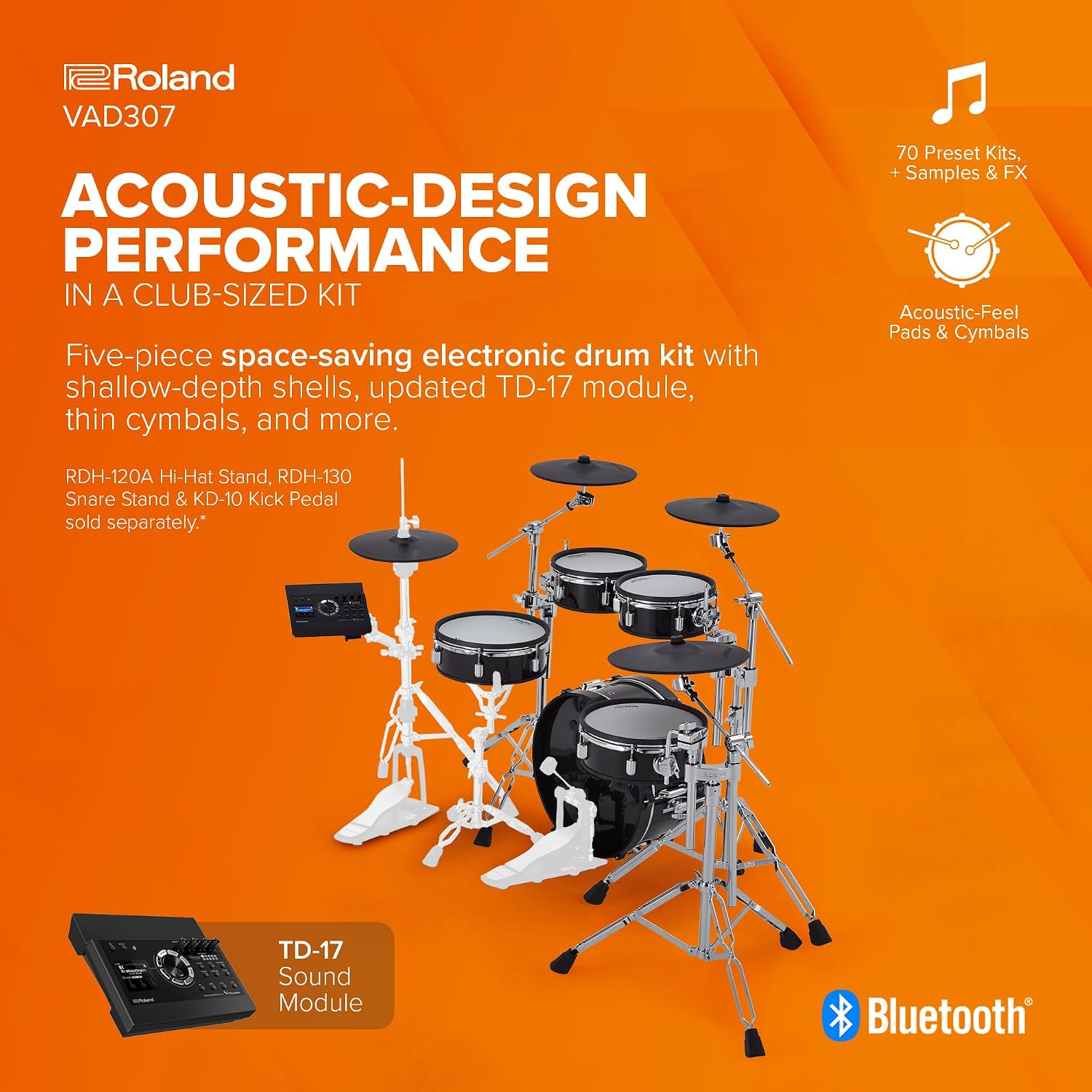
For most of drumming’s modern history, electronic kits — kits that use rubber or mesh pads wired to a sound module (a small computer brain that converts hits into audio) instead of traditional acoustic shells — made a practical trade-off obvious: you gained volume control and headphone practice, but you gave up the feel of a real drum. The rebound was wrong, the layout felt cramped, and your hands knew the difference immediately. That gap has been closing fast. A new category of premium electronic kits — sometimes called “acoustic-design” or “hybrid-shell” kits — now wraps genuine wooden shells, real drum hardware, and full-size heads around the electronic internals. The result is something that plays startlingly close to an acoustic kit while still living in an apartment, traveling in a van, or feeding directly into a DAW (digital audio workstation — the software musicians use to record and produce music) without mic placement. This article breaks down what that design shift actually costs, what it gets you, and whether it’s the right call for where you are right now.
What “Acoustic-Design” Actually Means — and Why It Matters
The phrase gets used loosely by marketing teams, so it’s worth pinning down the mechanics. A standard mid-range electronic kit uses rubber pads or simple mesh heads stretched over plastic frames. They’re functional, but the feel under a stick — the amount the head pushes back, the way energy travels down the shaft — is noticeably synthetic. Acoustic-design kits change the architecture at several levels simultaneously.
Shell construction. Flagship models like the Roland VAD706 and the Yamaha DTX10K-X use real wood shells — the same maple and birch cylinders you’d find on a mid-tier acoustic kit. Wood resonates differently than plastic under a stick hit, and that resonance travels into your hands and wrists as physical feedback, even when the shell isn’t producing sound the traditional way.
Head and hoop geometry. Full-size heads mean the playing surface matches what you’d find on a 14-inch snare or a 22-inch bass drum. Reviewers at MusicRadar’s 2025 electronic drum kit roundup consistently flag this as the single biggest feel upgrade — a 14-inch mesh head behaves like a 14-inch acoustic head in terms of rebound and tension adjustment. You can tune it with a standard drum key, which means muscle memory from acoustic playing transfers directly.
Hardware ecosystem. Acoustic-design kits ship with proper tube stands, tilting tom arms, and in some configurations, real hi-hat stands with clutch mechanisms. That means your limb positioning and ergonomics match what you’d use on stage or in a recording session.
Sensor sophistication. Higher-end kits move from single-zone sensors (which detect only whether a hit happened) to multi-zone sensing that captures rim shots, edge hits, and bow versus bell cymbal articulation. Sound On Sound’s 2023 VAD706 review noted the kit’s ability to translate positional data — where on the head you strike — into tonal variation, which is something even modestly priced acoustic heads do naturally.
The cumulative effect is significant. Drummers moving between an acoustic kit and a premium acoustic-design electronic kit report shorter adjustment periods and less technique compensation. Drumhead Magazine’s feature on the acoustic-electronic divide (Issue 48) interviewed touring players who had adopted high-end e-kits as their primary practice instrument precisely because the muscle-memory transfer had become reliable enough.
The Honest Cost Breakdown
Here’s where practitioners need to do arithmetic, not just read spec sheets.
By the numbers — typical acoustic-design e-kit investment (2026 market):
| Layer | Typical spend |
|---|---|
| Kit itself (e.g., Roland VAD706, Yamaha DTX10K-X) | $3,500 – $5,000 |
| Amplifier or monitor (e.g., Roland PM-200) | $400 – $700 |
| Mesh head replacements over 3 years | $150 – $300 |
| Interface or mixer if routing to DAW | $0 – $400 (often already owned) |
| Noise isolation platform (riser + foam) | $100 – $300 |
That puts a realistic all-in number at $4,200 to $6,700 for a serious setup — before you factor in any existing gear you’re already running.
Compare that to the acoustic alternative at a similar performance tier. A Gretsch Renown or Yamaha Recording Custom shell pack runs $1,200 to $2,000 for shells alone. Add a quality cymbal complement — Zildjian A Custom or Sabian HHX — and you’re at $2,500 to $3,500 total before hardware, heads, and cases. Then layer on what acoustic drums actually cost in a real living situation: soundproofing, rehearsal space rental, DAW integration via microphones and a multi-channel interface. Sweetwater’s electronic drum buying guide estimates that home recordists adding acoustic drum recording from scratch (mics, interface, treatment) commonly spend $1,500 to $3,000 beyond the drum kit itself.
The math isn’t as lopsided as the sticker price suggests. The acoustic-design e-kit is the more expensive instrument; it is not necessarily the more expensive setup.
Resale note. Roland VAD-series and Yamaha DTX10K models hold value reasonably well on the used market — better than mid-tier plastic-shell e-kits, which depreciate sharply. Owners on gear forums consistently report getting 60–70% of original purchase price back within two years if the kit is kept in good condition, which is broadly in line with quality acoustic kits. Budget electronic kits often fetch 30–40%.
Where These Kits Win — and Where They Still Fall Short
Being honest about the tradeoffs is the only way this decision holds up.
Clear wins:
Practical volume control. This is obvious but worth stating completely: you can play at 1 a.m. with headphones and a neighbor in the next unit who never knows. For apartment dwellers, this isn’t a feature — it’s the entire decision.
DAW integration without mic hell. Premium kits output clean MIDI and line-level audio directly. Owners consistently report that routing a VAD706 into Ableton Live or Logic Pro X takes under an hour to configure and produces immediately usable drum tracks. Recording acoustic drums well — phase-aligned multi-mic setups, room treatment — is a craft that takes years to learn and gear that stacks up.
Practice consistency. You can set the sound module to trigger any kit sound — a vintage Ludwig, a modern Yamaha Recording Custom, a brushed jazz sound — which means you’re practicing to the exact sonic context of a recording session rather than whatever your acoustic kit sounds like in your spare bedroom.
Touring and transport. A full acoustic-design e-kit breaks down and reassembles in roughly the same time as a traditional acoustic setup. The weight is comparable. But the kit doesn’t care about humidity, temperature swings, or airline cargo holds the way wooden acoustic drums do.
Real limitations:
Cymbal feel is still a gap. Even the best electronic cymbal pads — Roland V-Cymbals, Yamaha XP cymbal pads — don’t replicate the complex, springy give of a real bronze cymbal. Players who rely heavily on cymbal technique, particularly jazz and fusion drummers who work the edges and bells with precision, consistently flag this as the category’s most persistent weak point. MusicRadar reviewers in their 2025 roundup noted that no current e-cymbal fully replicates the lateral flex and stick rebound of a 20-inch ride.
Bass drum feel differs. A mesh bass drum head with a beater doesn’t give you the same resistance and rebound as a real head tensioned over an acoustic shell. This is less of an issue for players using electronic bass drum triggers as a supplement, but it matters for players developing foot speed and technique on a kit used as a primary practice instrument.
Sound module dependency. The acoustic-design shell is inert without its module. If Roland discontinues module support for a 2026 VAD706 in 2032 — a reasonable six-year horizon — you’re looking at a kit that requires third-party trigger interfaces to remain functional. Acoustic shells, by contrast, make sound forever.
The “feel” ceiling is real, not marketing. These kits have crossed a threshold where they no longer feel like a clearly inferior substitute. But practitioners with serious acoustic technique will still notice the difference during extended playing sessions. The goal is transfer-quality parity, not identity — and most owners report achieving that at the $3,500-and-up tier.
Picking the Right Tier for Your Situation
The acoustic-design category currently breaks into three tiers, each with a different value proposition.
Entry-level acoustic-design ($800–$1,500): Kits like the Roland TD-17KVX or Alesis Nitro Max use mesh heads on partial metal frames with limited wood elements. Sweetwater’s buying guide categorizes these as “acoustic-inspired” rather than full acoustic-design. They’re genuinely better than rubber-pad kits but still feel noticeably electronic. These make sense if you’re testing whether electronic practice fits your workflow before committing at a higher level.
Mid-tier acoustic-design ($1,500–$3,000): The Yamaha DTX8K-M and Roland VAD307 enter real shell territory. Owners report meaningful feel upgrades over the tier below. If your primary constraint is budget and you’re a working intermediate player who needs reliable practice-to-stage transfer, this tier lands well.
Premium acoustic-design ($3,500–$5,000+): The Roland VAD706 and Yamaha DTX10K-X are the reference points. Full wood shells, multi-zone sensing throughout, proper hardware — these are the kits where experienced players consistently stop noticing the difference during practice. Sound On Sound’s VAD706 review called it “the first electronic kit I’d recommend to a working drummer without qualification.” This tier makes economic sense if you’re routing regularly into a DAW, playing in volume-restricted environments professionally, or treating the kit as long-term recording infrastructure.
The Decision Rule
If you’re sitting with a pending purchasing decision, here’s the clean version:
If your primary constraint is volume or space, and you play regularly enough that feel transfer to acoustic gigs matters — go to at least the mid-tier acoustic-design category. Anything below leaves technique compensation on the table.
If you’re building a home studio where drum recording is going to be a recurring need — the premium acoustic-design tier competes economically with a full acoustic recording setup once mic gear, treatment, and interface costs are included.
If cymbal technique is central to your playing style — budget for a real cymbal complement alongside your e-kit, or accept the gap and weight it accordingly in your decision.
If resale matters to you — stick to Roland VAD-series or Yamaha DTX10K. The used market for these is established and predictable. Boutique or lesser-known acoustic-design kits haven’t built the same resale infrastructure yet.
The e-kit finally feeling like the real thing isn’t marketing language anymore — it’s an accurate description of a specific tier, at a specific price point. Knowing exactly where that threshold sits is the difference between a purchase you’ll grow into and one you’ll grow out of.